English| EUR
Suggested for you
More currencies
Choose a language
Newark Liberty International Airport sits 16 miles southwest of Midtown Manhattan, separated by the Hackensack River, the New Jersey Turnpike, and the Hudson. The distance is short, but the route choice shapes your arrival time, comfort, and cost. This guide covers every transfer option, the factors that slow each one down, and the practical details that determine which works best for your schedule.
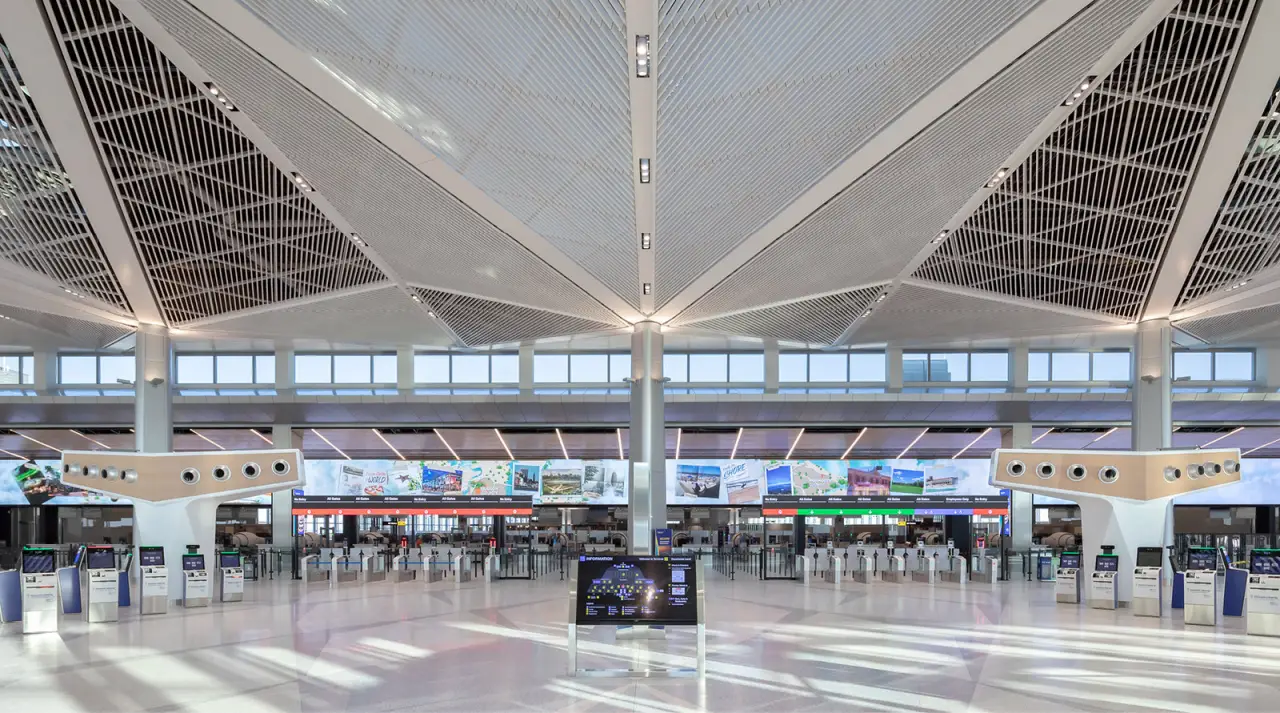
Quick answer
You can reach Manhattan from Newark Airport by train, bus, rideshare, taxi, or private transfer. NJ Transit and Amtrak trains take 20 to 35 minutes to Penn Station. Express buses run 45 to 75 minutes depending on traffic. Taxis and rideshares take 30 to 60 minutes via the Lincoln or Holland Tunnel. Private transfers offer fixed routes and meet you at arrivals.
Newark Liberty processes over 46 million passengers each year, and the majority cross the Hudson into Manhattan within an hour of landing. The airport operates around the clock, and ground transport runs continuously, but the speed and convenience of each mode shift with the time of day, the terminal you arrive at, and the Manhattan neighborhood you're heading to. The AirTrain connects all three terminals to Newark Liberty Airport Station, where NJ Transit commuter trains and Amtrak Northeast Regional services depart for New York Penn Station. The rail route bypasses road congestion entirely and delivers passengers to the center of Midtown in under half an hour. Express bus services leave from the ground-transportation areas outside each terminal and follow dedicated routes into Manhattan, stopping at Grand Central, Bryant Park, and the Port Authority Bus Terminal. Rideshare pickups operate from designated zones on the arrivals level, and yellow taxis queue at ranks outside each terminal's baggage claim. Rush hour on the New Jersey Turnpike and the approach to the Lincoln Tunnel can double road travel time between 7:00 and 10:00 in the morning and 16:00 to 19:00 in the evening. Weekend traffic is lighter, but construction, events, and bridge congestion can still delay surface routes. The train schedule is immune to road conditions, and the AirTrain runs every few minutes throughout the day. Travelers arriving late at night or early in the morning will find fewer buses and longer waits for rideshares, but trains and taxis operate without interruption. The choice of transfer depends on your destination within Manhattan, the number of passengers, and the amount of luggage. Groups of three or more often find that a shared taxi or private transfer costs less per person than individual train tickets, and eliminates the need to navigate the AirTrain with heavy bags. Solo travelers heading to Midtown save time and money on the train. Those staying downtown or on the Upper West Side may find that a direct rideshare or taxi is faster than transferring from Penn Station to another subway line.
“The rail route bypasses road congestion entirely and delivers passengers to the center of Midtown in under half an hour.”
Newark Liberty International Airport is located at 3 Brewster Rd, Newark, NJ 07114. Travelers moving toward Manhattan have access to several transit options including regional rail, bus services, and private vehicle arrangements.
NJ Transit to New York Penn Station
Newark Airport Express to Port Authority
Direct via I-78 E and NJ-139 E
Private transfer via I-95 N
The airport operates 24 hours, but avoid rush hours for faster ground transit to Manhattan. Coordinate your private transfer or transit plan in advance to minimize wait times upon arrival.
The cost of traveling from Newark Liberty International Airport to Manhattan depends on the mode of transit selected, ranging from public rail options to private ground transportation.
Verdict: Most travelers pay between 2.75 USD and 16.00 USD for public transit, while private transfer costs vary based on distance and service level.
Getting from Newark Airport to Manhattan involves four main stages: deplaning, collecting baggage, navigating to ground transportation, and boarding your chosen transit mode. The entire process from touchdown to midtown typically takes 60–90 minutes depending on terminal location and transit choice.
After landing, follow illuminated overhead signs toward baggage claim—these direct you through the secure area to the baggage carousels. Most travelers miss the restroom opportunities here before the crowded pickup zones.
Locate your flight number on the digital monitors above each carousel and wait at the corresponding belt. Bags typically arrive 15–25 minutes after landing; report missing items immediately at the airline's baggage service office near the carousels.
Follow signs for "Ground Transportation" or "AirTrain" depending on your choice—AirTrain stations connect directly from each terminal, while taxi and rideshare zones require exiting to the arrivals curb. Private transfer drivers typically wait in the arrivals hall holding name signs.
For AirTrain, purchase tickets at kiosks before boarding toward New York Penn Station. Taxis use meters and accept cards at the vehicle. Rideshares require matching the license plate in your app before entering.
Travel time ranges from 30 minutes via express train to 60+ minutes in traffic for road options. Keep your belongings secure and confirm your drop-off address as you approach Manhattan.
Travelers often make avoidable errors when planning their journey from Newark to Manhattan. Recognizing these pitfalls helps ensure a smoother arrival experience.
Arriving without cash for tolls or tips
Many ground transport options require cash for tolls, tips, or exact fare. Withdraw bills at the airport ATM before heading to your pickup point.
Ignoring terminal-specific pickup zones
Each terminal has designated areas for taxis, rideshares, and shuttles—mixing them up causes delays. Check your terminal number on your boarding pass and follow the corresponding ground transportation signs.
Underestimating travel time during peak hours
Rush-hour traffic (weekdays 7–10 AM and 4–7 PM) can double your travel time to Manhattan. Build in extra buffer time if your arrival coincides with these windows, or consider rail options that bypass road congestion.
Booking a shuttle without confirming Manhattan drop-off
Some airport shuttles serve only specific hotel zones or require advance reservations. Verify your exact Manhattan destination is covered before boarding to avoid being stranded at an intermediate stop.
Missing AirTrain connections by waiting at the wrong platform
The AirTrain has three routes—only Route P4 connects to NJ Transit and Amtrak at Newark Liberty International Airport Station. Follow overhead signs carefully and board the correct color-coded train to avoid circling back through all terminals.
Everything you need to know about how to get from newark airport to manhattan
Determining how to get from newark airport to manhattan depends on your preference for speed, budget, and convenience. Travelers can choose between public transit options like NJ Transit trains, airport shuttles, or pre-arranged private vehicles.
Transit costs vary significantly depending on your chosen mode of transport. While public rail and bus services offer lower fares, private transfers provide a fixed price and direct door-to-door service without extra station stops.
Yes, NJ Transit provides rail service from the Newark Liberty International Airport Station to New York Penn Station. Passengers typically take the AirTrain from their terminal to connect to these regional rail lines.
Private transfers are a popular choice for visitors seeking comfort and reliability. These services eliminate the need to navigate public transit terminals with luggage and offer a seamless arrival experience into the city.
The airport is open 24 hours daily, meaning ground transportation is available at all times. However, travelers should be mindful that transit options and traffic patterns fluctuate throughout the day.
A common mistake is failing to account for rush hour traffic when booking ground transport. Avoiding peak periods helps ensure a faster arrival at your destination in Manhattan.
The travel time to Manhattan depends heavily on your transport method and traffic conditions. While trains offer predictable schedules, road-based transport can experience delays during busy commuting hours.